 VINtoRegCheck
VIN: the modern vehicle identifier
Most modern vehicle VINs contain 17 characters. You may find the identifier on the vehicle, in its registration paperwork and in relevant service records. Copy the complete entry, including any initial letters.
A VIN-like format is useful for checking an input, but it is not proof that a record exists. The form does not confirm model specifications or produce an immediate registration result when you press Find.
Chassis number: the wording can depend on age
The term comes from the vehicle's structure and remains common in records and conversation. On a modern car, a document asking for the chassis number is commonly asking for the VIN. For an older vehicle, the chassis number may not follow the 17-character pattern.
Treat the number in its original form. Do not assume a short code is incomplete, and do not add characters to make it look modern. If you want a report for a non-standard chassis number, contact us before ordering.
Engine number: a separate reference
An engine can have its own identifying number. It may appear near the VIN in paperwork, which makes it easy to copy the wrong line. An engine number cannot be substituted into this site's VIN field.
If you are ordering parts, the supplier may ask for several pieces of information. Follow that request rather than assuming a registration alone covers every variation. Ask it to confirm suitability before you place the parts order.
Registration number: the plate reference
The registration is the reference displayed on the vehicle's UK plates. It is not embedded in a form that can simply be read out of the VIN. Linking the two is a records task, not a character conversion.
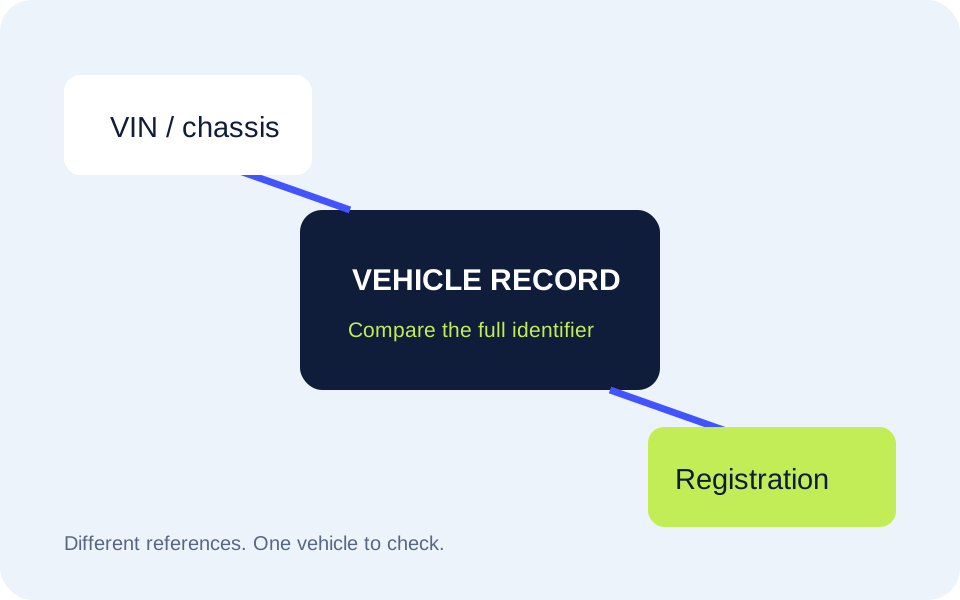
If you already have current paperwork containing both, compare the VIN carefully before using the registration. If the record is old or inconsistent, retain its date and source while you ask for clarification.
Which one should you enter here?
Use the full modern VIN. Find opens the email and payment step for the £7 report, with no plate revealed in that step. For a shorter chassis code, ask first. For help locating the identifier, read where to find a VIN.
Questions about this page
Can I use an engine number instead?
No. The engine number is separate and is not a substitute for the VIN in this form.
Does a shorter chassis number always mean something is wrong?
No. Older vehicles can use shorter formats. Keep the recorded identifier and ask about it before ordering.